

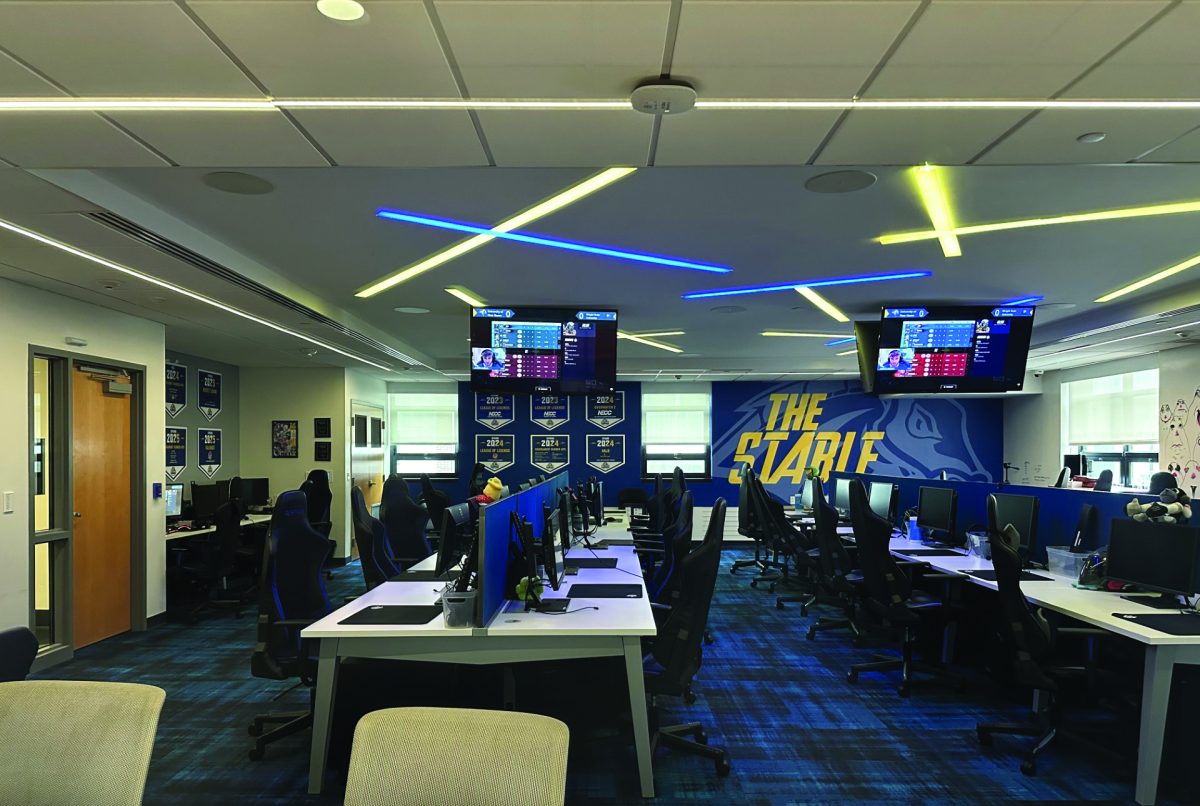
The ongoing financial struggles within the university caused by the increased number of international students facing visa restrictions have begun to affect faculty and students.
Nancy Ortins Savage, the university’s provost and senior vice president for academic affairs, said in the Hartford Courant, “Several undergraduate and graduate programs across the university will pause enrollment or close over the next academic year.”
The university is left with no choice but to start implementing decisions regarding faculty and students in these upcoming paused or closed programs. Savage explained the university’s approach to selecting the programs that are being paused or cut.
“Innovation in curriculum development remains essential, and it must be coupled with a willingness to revise or discontinue programs that do not materialize as planned or no longer meet institutional or market-driven needs,” said Savage.
The university continued to have these discussions in private with faculty, with confirmation of select majors that are being paused or closed – specifically, the programs of esports and digital game management and the public health program.
Derek J. Smith, academic program coordinator for esports and digital game management, assistant professor of practice for sport management and a school alumnus, confirmed that these conversations began last semester.
“Because of the deficit, they have tried to cut as much as they could in terms of non-operational expenses, so they didn’t want to cut faculty, especially full-time faculty,” said Smith.
On Feb. 20, the Pompea College of Business hosted an all-staff meeting, where the dean of the college, Brian T. Kench, announced the cuts that will be made due to budget constraints.
Smith said he realized that the program might be in jeopardy because of the lack of growth and sustainability within it. He said that by transforming the program into something that offers students information and unique courses in regards to the business side of gaming has been amazing.
Smith said he understands that fellow staff members might be hesitant to speak about their termination, but he chose to speak and express his gratitude to the university for giving him an opportunity to showcase his passion for innovation and teaching.
What does this mean for students? Miles Carter, junior esports and gaming student, is one of the last students from his year who will graduate with the degree. When he heard about the news from Smith, Miles said he spoke with his classmates, and wondered what it meant for them.
“I was sad after hearing that Derek was laid off due to major closure,” said Carter. “He is a great teacher and advisor.”
Luckily for Carter’s cohort and the cohort before, graduation is not an issue, as Smith set up his students so that they only need to complete electives and classes in their respective minors.
These changes have also taken a course in the public health department last semester when students were informed of the discontinuation of their major.
“All that was said was that public health will no longer be considered a major, but it can be considered a concentration or minor,” said Foyinsola Esan, junior public health student.
Esan said she recognized a shift once she came back from spring break, when she saw that some professors had been let go.
“The official date of the discontinuation is still pending, but it is definitely soon because I can see the signs of it already,” said Esan. “I am currently enrolled in the dual degree program for my MPH, but I am considering doing it somewhere else because it got much more complicated after this news.”
As the university deals with the changes, Smith still looks at the bright side with finishing up the semester and launching his esports and digital game management global landscape summer course.
“Sometimes a blank canvas is the best canvas because there’s nothing but opportunity there, and I have a blank canvas right now and waiting on that opportunity,” he said.